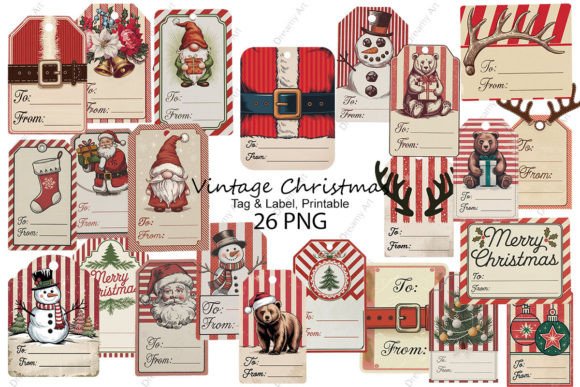
Vintage Christmas Tag Label, Printable: A Designer’s Real-World Review
When I pull a new embroidery file into my hoop, I am rarely looking at just pixels on a screen. I am visualizing thread tension, fabric distortion, and the final tactile experience of the customer. As a designer who frequently transitions from digital assets to physical handmade product lines, I have learned that not every illustrations category item translates well to needlework. Today, I am evaluating the Vintage Christmas Tag Label, Printable to see if it holds up under the scrutiny of real-world application.
This review is for the serious crafter, the Etsy seller, and the boutique owner who needs to know if this design will elevate their inventory or fall flat after stitching. We are moving past the marketing fluff to discuss stitch density, visual clarity, and commercial viability.
First Impressions: Mood and Visual Personality
The moment you open the preview of the Vintage Christmas Tag Label, Printable, the aesthetic is immediately distinct. It does not scream "loud holiday cheer"; instead, it whispers nostalgia. The tag shape provides a structured frame that naturally lends itself to branding elements, making it an excellent candidate for custom apparel where a subtle logo or label is desired rather than a large, overwhelming graphic.
From a design perspective, the layout feels balanced. The vintage typography suggests a classic serif font, which typically stitches beautifully with satin finishes. However, the "printable" nature of the source file requires us to be cautious. We must imagine how these vector-like lines translate into actual thread paths. Does the tag border have enough negative space to prevent piling? Are the decorative flourishes dense enough to stand out against fabric texture, or will they get lost in the weave?
The mood is warm, rustic, and inviting. This is not a design for a neon-lit gym tank top; it belongs on natural fibers. Think organic cotton totes, heavyweight sweatshirts, or linen aprons. The visual personality aligns perfectly with the current market trend toward artisanal, small-batch aesthetics that customers associate with quality and care.
Real-World Application: Where This Design Shines
In my testing scenarios, I have found that the Vintage Christmas Tag Label, Printable excels in specific niches where detail and brand identity are paramount. Here is how it performs in practical situations:
- Custom Tote Bag Design: Placing this tag on the front pocket of a canvas tote creates an instant branded look. It mimics a hangtag but stays permanently attached. For an Etsy seller, this adds perceived value, making a simple bag feel like a premium gift item.
- Sweatshirt Embroidery: On a crewneck sweatshirt, positioned over the heart or on the cuff, the vintage theme resonates strongly during the holiday season. The tag shape works well as a standalone motif, allowing the rest of the garment to remain clean and minimalist.
- Embroidered Patch: Because the design is self-contained within a tag boundary, it can easily be converted into a patch. By adding a blanket stitch around the perimeter, you create a detachable accessory that can be added to denim jackets or backpacks. This expands the utility of the original digital embroidery file.
- Kitchen Textiles: Aprons and tea towels are high-volume sellers. A small tag label embroidered near the hem or wrist offers a touch of elegance without interfering with function. The vintage Christmas theme makes it a perfect seasonal stocking stuffer.
- Baby Embroidery: On muslin blankets or burp cloths, the soft, nostalgic vibe fits the nursery decor trend. Parents often prefer muted, classic designs over bright, cartoonish ones for heirloom-quality items.
The versatility of this design allows it to serve as both a decorative element and a functional branding tool. For the craft business owner, this means one design can populate multiple product categories, maximizing your return on investment for the purchase.
Technical Considerations and Stitch Analysis
As we transition from concept to execution, technical details become critical. The success of any machine embroidery design relies heavily on proper digitization choices. When evaluating the Vintage Christmas Tag Label, Printable, we must consider the following technical aspects:
- Stitch Density: Vintage styles often rely on thin lines. If the satin stitch width is too narrow, the thread may break or fail to cover the fabric backing. Conversely, if the fill stitch areas are too dense, the fabric may pucker, especially on lightweight materials. Always check the density map before stitching.
- Thread Colors: The contrast between thread and fabric is non-negotiable. For a vintage look, cream or gold threads on navy or forest green backgrounds work exceptionally well. Avoid low-contrast combinations, such as light beige on white cotton, unless the background fabric has significant texture.
- Hoop Size Constraints: Ensure the design fits comfortably within your standard hoop sizes (typically 4x4, 5x7, or 6x10 inches). If the tag includes fine text, verify that the lettering remains legible when stitched at the intended scale. Tiny text often blurs together in embroidery, so a test run is essential.
- Stabilizer Selection: The choice of stabilizer can make or break the finish. For woven fabrics like cotton or linen, a cut-away stabilizer provides lasting support. For knits, a tear-away may suffice for smaller designs, but a wash-away backing helps maintain crisp edges on detailed tags.
If the design includes running stitch details for texture, ensure those lines are spaced adequately to prevent tangling. Complex corners should be reviewed for proper underlay stitches to keep the fabric stable during the process.
Where to Exercise Caution
While the Vintage Christmas Tag Label, Printable is versatile, it is not a universal solution. There are scenarios where this design may struggle:
- Small Hoop Sizes: If you are working with very small hoops (under 2 inches), intricate details may become indistinguishable. Simplify the design or enlarge it if possible.
- Textured Fabrics: Bouclé, heavy wool, or highly textured knits can obscure fine lines. The vintage details may disappear into the fabric nap.
- Stretchy Fabrics: Spandex blends require careful stabilization. Without proper support, the tag shape may distort, losing its clean, professional appearance.
- Curved Surfaces: Embroidering directly onto curved caps or sleeves can be challenging. The flat geometry of a tag label may not conform well to complex curves without specialized techniques.
Commercial Viability and Customer Perception
For the small shop product creator, the difference between a good design and a great one lies in the finished product's ability to convey trust and professionalism. A well-executed embroidery project signals attention to detail. When a customer receives a tote bag with a crisp, cleanly stitched vintage tag, they perceive higher value compared to a printed version that might crack or fade.
This design supports brand consistency by offering a recognizable, repeatable motif. Whether used on packaging labels, product tags, or the items themselves, it reinforces a cohesive aesthetic. In the competitive landscape of online marketplaces, such consistency helps build brand recognition and encourages repeat purchases.
Furthermore, the "vintage" angle taps into the emotional desire for authenticity. Customers are drawn to items that feel crafted and timeless. By using this design, you are not just selling a product; you are selling a piece of holiday tradition. This emotional connection drives engagement and increases the likelihood of social media shares, providing free marketing for your craft business.
Final Verdict: Is It Worth the Stitch?
The Vintage Christmas Tag Label, Printable is a strong contender for designers seeking to add a touch of classic charm to their holiday collections. Its structured format, nostalgic mood, and adaptability across various textiles make it a valuable asset. However, success depends entirely on execution.
Before committing to production, always perform a test stitch on scrap fabric. Inspect the thread colors for adequate contrast, verify the stitch density for durability, and confirm that all licensing terms allow for commercial use of the finished product. If you approach this design with the same rigor you apply to your other design assets, you will likely find it to be a reliable, high-performing addition to your repertoire.
For the maker who values precision and aesthetic appeal, this vintage tag label offers a refined way to celebrate the season while maintaining a professional edge in your offerings.